
How to Spy on Your Competitors’ Ads and SEO (Using Free Tools)
Roy Bielewicz
Competitive Insights
If you’re running digital marketing campaigns, whether for your own company or for clients, one of the smartest strategic moves you can make is studying your competitors. Are they investing in Google Ads? Are they dominating organic search? Are they testing messaging across paid social platforms?
You don’t need access to their accounts to get meaningful insight. There are free tools that allow you to analyze competitor keywords, ad visibility, and estimated traffic. Used properly, these tools won’t give you perfect numbers, but they will give you direction. And direction is what drives better strategy.
Why Competitor Analysis Matters in Digital Marketing
Competitor research is not about copying someone else’s strategy. It’s about understanding the competitive landscape so you can make smarter decisions. When you analyze competitor SEO and paid advertising activity, you start to see patterns. You see which keywords they prioritize, whether they are leaning into brand or non-brand traffic, and whether they are investing heavily in paid acquisition.
The goal is clarity. If a competitor is aggressively bidding on high-intent keywords, that tells you something about profitability. If they rank for hundreds of long-tail search terms, that signals a strong content strategy. If they appear inactive in search but visible on social, that suggests a different acquisition model. Those patterns matter far more than exact traffic estimates.

Free Tools to Analyze Competitor SEO and Ads
Several platforms provide insight into competitor digital marketing performance. Tools like Ahrefs, SEMrush, and SpyFu allow you to enter a domain and see estimated organic keywords, sample ranking pages, overlapping competitors, and even paid search terms.
Even the free versions of these platforms can provide valuable directional data. You may not get full keyword lists or precise traffic numbers, but you can quickly identify what themes a competitor is targeting and whether they are active in paid search. That alone can reshape how you approach your own SEO and PPC campaigns.
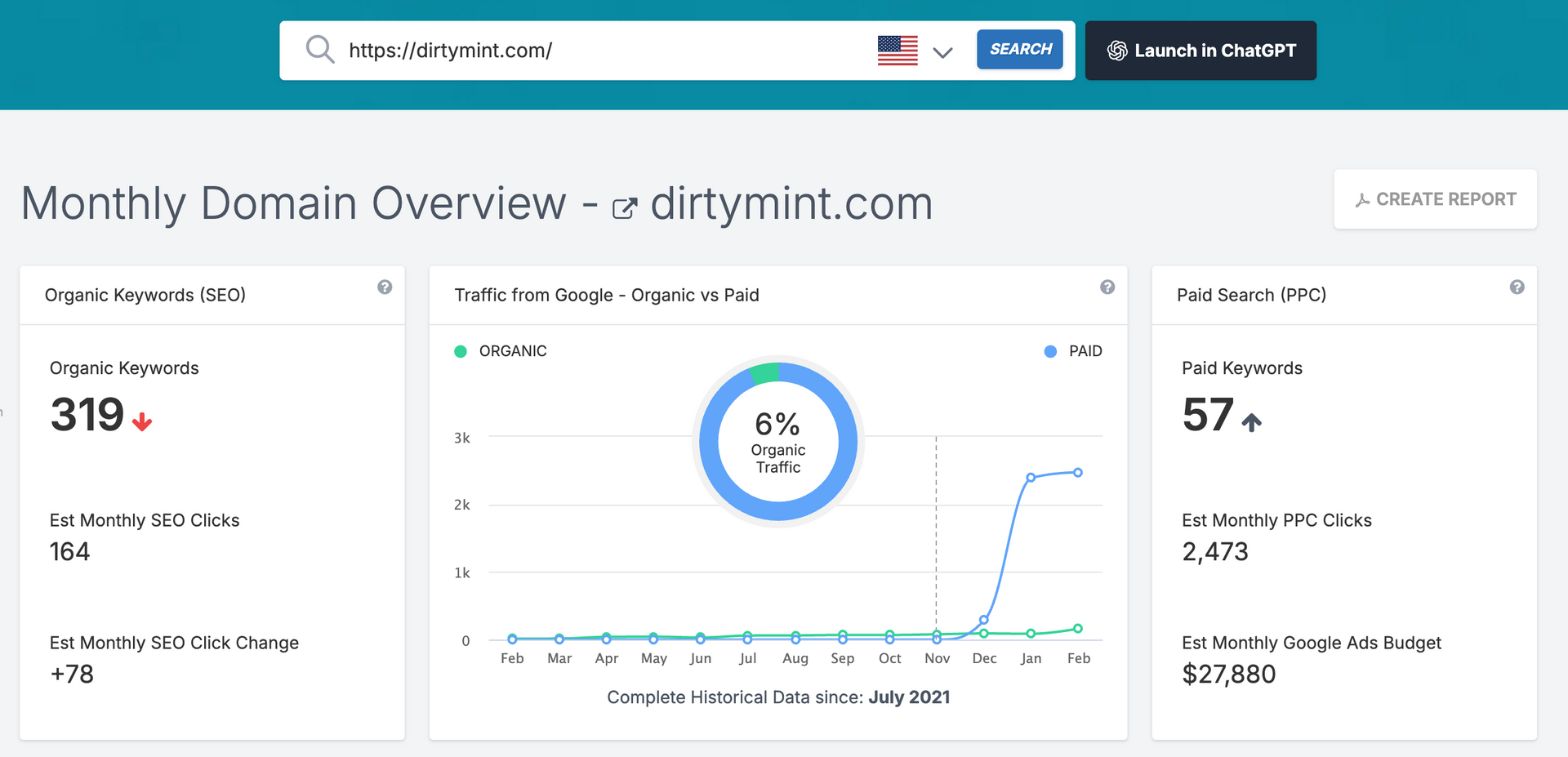
Using SpyFu to Analyze Competitor Keyword Strategy
When you enter a competitor’s website into SpyFu, you can typically see a snapshot of their organic rankings and paid keywords. This often includes examples of search terms they rank for, estimated clicks, and sometimes historical ad activity.
While the data is limited in free versions, it is enough to identify strategic focus. If you notice a competitor consistently ranking for service-based keywords, that tells you their SEO strategy is conversion-oriented. If their paid search activity centers around transactional queries, it indicates strong buyer-intent targeting. Even seeing a handful of keyword examples can reveal positioning, pricing emphasis, or niche specialization.
Understanding the Limitations of SEO Tools
It’s critical to understand that platforms like Ahrefs and SEMrush do not show real analytics data. They provide estimates based on their own data models. If you compare their traffic projections with actual numbers inside Google Analytics or campaign data from Google Ads, you will often see discrepancies.
Traffic estimates can be inflated or understated. Keyword rankings may not be fully accurate. Paid ad data may lag or miss certain campaigns entirely. That does not make these tools useless—it simply means you must treat the information as directional rather than definitive.
Think of these platforms as reconnaissance tools. They help you identify movement in the market, not audit-level reporting.
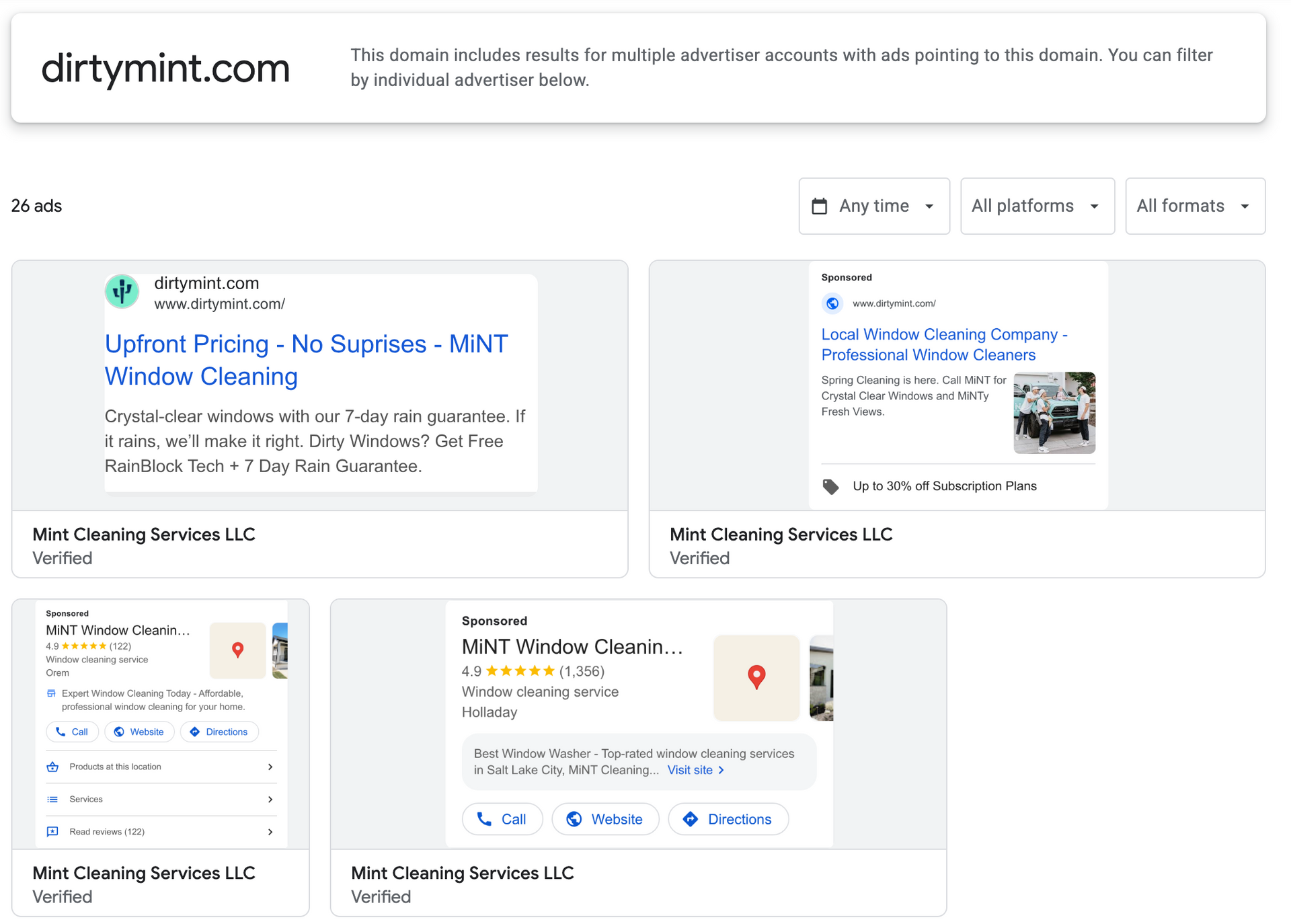
Analyzing Competitor Google Ads Activity
If you want to determine whether a competitor is actively running paid search campaigns, tools like SpyFu and SEMrush can give you a preview of their paid keyword targeting and ad copy samples within Google Ads.
You can often see which keywords they are bidding on, estimated cost-per-click, and even variations of ad headlines and descriptions. This is useful for evaluating messaging and offer strategy. For example, if you notice consistent promotional language or strong call-to-action phrasing, it may indicate that they are testing aggressively and optimizing conversion rates.
It also helps you identify whether they are defending brand terms, targeting competitor keywords, or focusing on broader non-brand acquisition.
To see the actual ads that a competitor is running, you can use Google Ads Transparency Center: https://adstransparency.google.com/. This will show you the actual text, creative, and variations of the ads that are active.
This is a great way to see possible promotions, calls-to-action, and targeting that your competitors are using in their Google Ads.
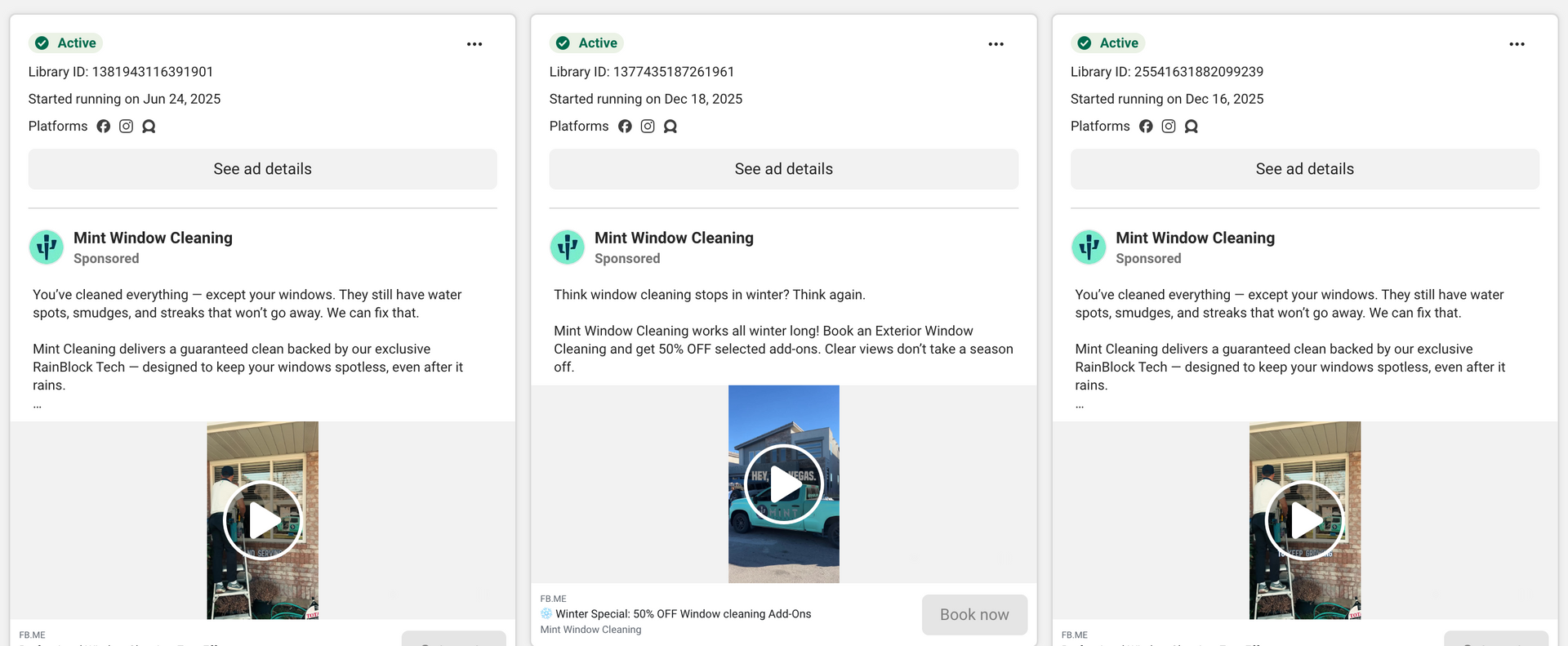
Checking for Paid Social Activity
Search is only one part of the equation. Many competitors invest heavily in paid social advertising. While SEO tools don’t always capture this accurately, you can analyze visibility on platforms like Meta Ads and TikTok through public ad libraries.
Reviewing active ad creatives can reveal a great deal about positioning. If a company is running multiple variations of the same offer, that signals structured testing. If their ads are consistent across weeks or months, that suggests they have found profitable messaging and are scaling it.
Creative consistency, frequency of updates, and offer structure all provide insight into how serious they are about paid acquisition.
What to Look for in Competitor SEO Strategy
When reviewing a competitor’s organic presence, focus less on raw traffic numbers and more on structural signals. Are they ranking for informational content or commercial intent terms? Are blog posts driving most of their visibility, or are service and product pages leading the way? Do they dominate long-tail keywords, or are they focused on high-volume head terms?
These distinctions matter because they tell you what stage of the funnel they are prioritizing. A content-heavy strategy indicates top-of-funnel acquisition. A commercial-intent focus suggests revenue-driven optimization.
The most powerful use of competitor SEO analysis is identifying keyword gaps. If competitors consistently rank for valuable terms that you are not targeting, that represents opportunity. You don’t need perfect data to see that pattern.
The Strategic Way to Use Competitor Data
The biggest mistake marketers make is obsessing over estimated traffic charts. The smarter approach is to look for patterns in behavior. Is your competitor scaling content production? Are they consistently appearing in paid search results? Are they visible across multiple platforms?
Patterns reveal strategy. Strategy reveals priorities. And priorities tell you where revenue is likely being generated.
Free competitor research tools will never replace direct analytics access, but they can absolutely give you strategic leverage. If you approach them with the right mindset—direction over perfection—you can uncover opportunities your competitors are already proving in the market.
Use the data wisely, validate your assumptions with your own testing, and let competitor analysis sharpen your decision-making rather than distract from it.

Contact Us